
Two-factor authentication (2FA) adds an extra layer of security by requiring two forms of verification before granting access. With single-factor authentication, typically a username and password, access depends entirely on those credentials remaining private. If they are compromised, an unauthorized user could gain full access to organizational data. Two-factor authentication reduces this risk by requiring verification through a trusted device.
To enable 2FA for your organization, navigate to Settings > Organization Settings > Two Factor Authentication. From here, enable this setting and click Save Changes.
Install an Authenticator
Supported platforms: Authenticator apps are available for both iOS and Android devices.
Before logging in with two-factor authentication, ensure that an authenticator app is installed on your mobile device. Common options include, but are not limited to, Google Authenticator, Authy, or Microsoft Authenticator.Scan QR Code
Once the authenticator app is installed, open it and scan the QR code displayed on your screen to link your account. You only need to complete this step once per account.
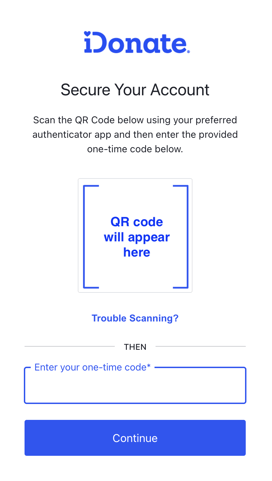
After scanning the QR code, the app will display a six-digit One-Time Code. Enter this code to complete the setup process.
At the end of setup, you will be provided with a Recovery Code, which serves as a backup login method. Save this code in a secure location, such as a password manager, before proceeding.
Store your Recovery Code in a secure location, such as a password manager or printed document kept offline. This code is the only way to regain access to your account if you lose access to your authenticator app. It cannot be recovered or regenerated once lost.
Logging In With 2FA
After setup is complete, every login requires the following two steps.
- Enter your username and password for iDonate.
-
When prompted, open your authenticator app, select your account, and enter the six-digit One-Time Code displayed.
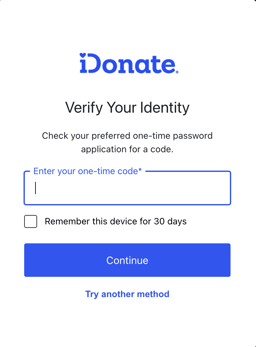
Once verified, you will be logged in. If you are unable to use your authenticator app, select Try another method when prompted for the One-Time Code. You will be presented with the following alternative login options:
- Authenticator app: Enter the six-digit One-Time Code from your authenticator app (Google Authenticator, Authy, Microsoft Authenticator, or similar). This is the standard 2FA login method.
- Recovery code: Use the Recovery Code you were provided at the end of the initial 2FA setup.