How do I Begin Building Community at my Nonprofit?
There is a yearning. And post-COVID it feels like it is growing stronger.
Features
Product Spotlight

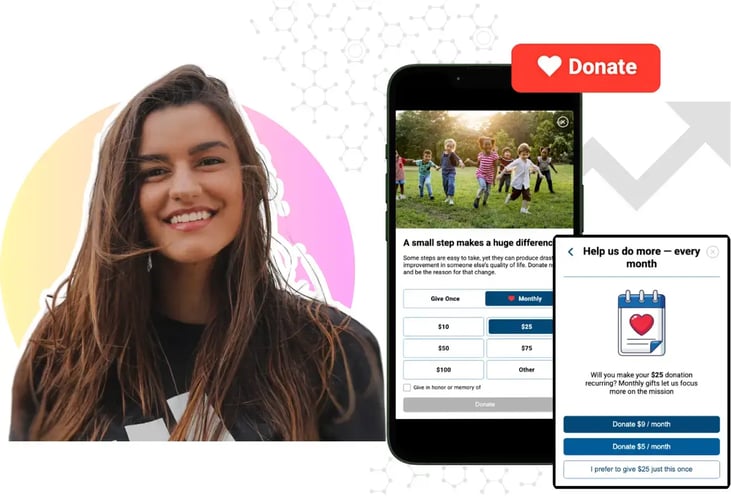
Mobile-First Pop-Up Donation Form
Launch mobile-first pop-up forms in minutes, use built-in tools to capture more donations, and optimize the giving experience—no dev team required.
By team
The essentials
New to online donation pages for your nonprofit? Start here.
Donation page A/B testing - no science degree needed.
Keep your donation page loading fast - and drive higher conversions.
Digital fundraising resources

The 4 Types of Online Donation Experiences
89% of donors leave without giving. Learn how to use the right donation form to close the gap and boost conversions.
2 min read
Brad Little : Updated on May 21, 2026
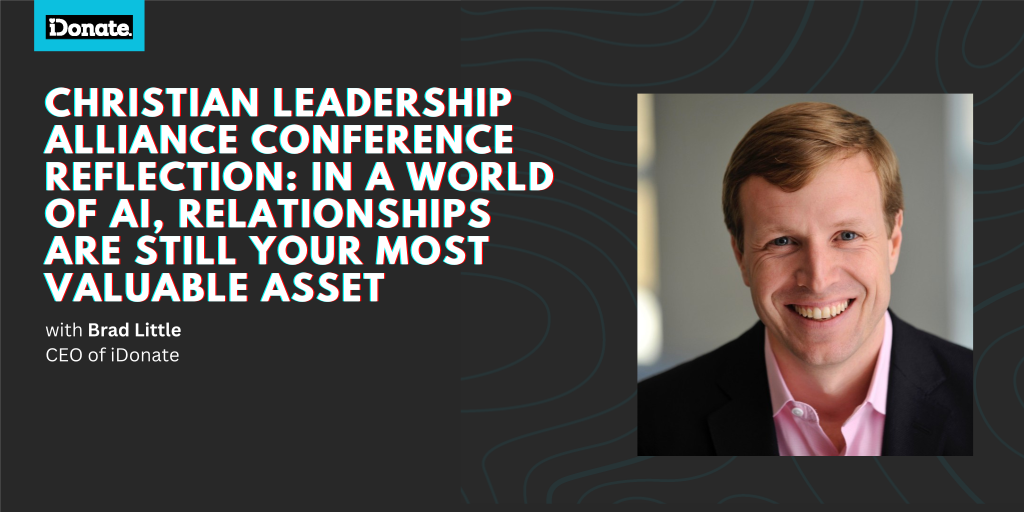
I don't get to every conference I'd like to, but the annual Christian Leadership Alliance (CLA) Outcomes Conference is one I make a point to attend. So many of the organizations we serve are faith-based, and being present in that community — not just selling to it — is important to me. The sessions were substantive this year. The conversations in between were better. I also got to spend some time with a customer over dinner, which I'll come back to. That part stuck with me.
No surprise; artificial intelligence was front and center at CLA this year. From donor communications and predictive giving models, organizations are moving fast. The ones leaning in thoughtfully are seeing real results: more personalized donor experiences, smarter segmentation, and operational efficiencies that let staff focus on higher-value work.
At iDonate, AI is something we're actively building into the platform, not as a buzzword, but as a practical capability. One area where we're seeing meaningful impact is in online giving forms. We're using AI to continuously test and optimize the online giving experience — things like layout, friction points, and conversion flow — so that our customers' donors encounter a form that's been refined in real time to appeal to them.
That said, the question we keep asking ourselves — and that I heard others wrestling with at CLA — is how to deploy AI without losing the soul of what mission-driven organizations do. The tools are powerful. How you use them is what defines you.
I had dinner with one of our customers while I was there — someone who's been around the sector a long time and whom I respect. We talked about where things are heading, what's working, what's not, and what they need from a partner like iDonate.
At some point in the conversation, the message was simple: your customer promise is your bond. Do what you said you would do.
It was a good reminder. In a world of bots and automated everything, there's something worth pausing on when someone values access to you — not just your product. That's the relationship. And in the mission-driven world especially, it matters.
The nonprofit world is different. The people leading these organizations aren't primarily motivated by margins. They're driven by calling. They want technology partners who are mission-aligned, not just good at the sales pitch.
As AI becomes more embedded in how we serve customers, we have to be intentional about keeping the human thread intact. Technology should amplify the mission, not replace the relational fabric that makes this sector what it is. Serve your customers. Anticipate their needs. Show up when things get complicated. That part of the job doesn't change no matter how good the tooling gets.
There's real pressure right now — for any technology company — to keep reinventing yourself around whatever's new. We're not immune to that. But what I keep coming back to is that innovation works best when it's in service of a clear identity, not a replacement for it.
CLA was a good reminder of what actually moves this sector forward. The energy around AI is real, and we're investing in it by pushing the platform forward in ways that directly serve the nonprofits and faith-based organizations we work with every day. But the dinner conversation was just as clarifying. Relationships and trust are still what this sector runs on. We're staying grounded in who we are.
There is a yearning. And post-COVID it feels like it is growing stronger.
During the Indianapolis leg of Taylor Swift’s Eras Tour, something unexpected happened on TikTok. Tess Bohne, a stay-at-home mom of three turned...
1 min read
Every year, nonprofits feel the pressure to do more with less. More donors. More dollars. More impact. And in that pressure, it’s tempting to chase...