
Skip to the main content.

Product Spotlight

Development Solutions Page Hero-1

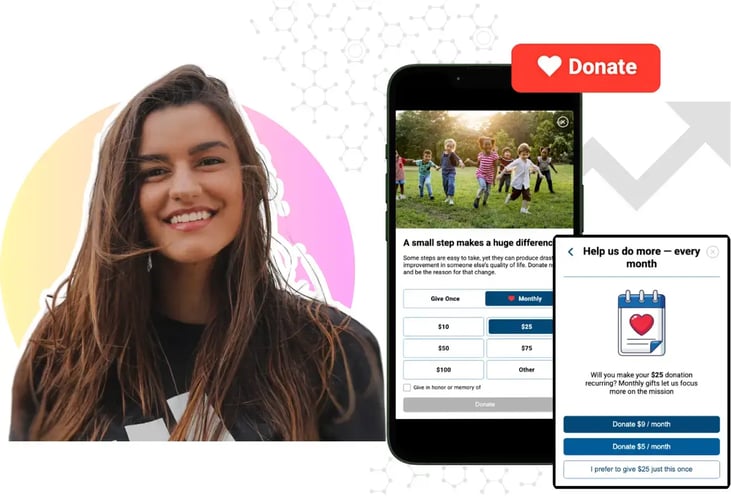
Mobile-First Pop-Up Donation Form

Launch mobile-first pop-up forms in minutes, use built-in tools to capture more donations, and optimize the giving experience—no dev team required.

The essentials

Donation page basics

New to online donation pages for your nonprofit? Start here.

Donation page A/B testing manual

Donation page A/B testing - no science degree needed.

Optimizing donation page load times

Keep your donation page loading fast - and drive higher conversions.

Recent

four-types-of-online-donation-experiences

The 4 Types of Online Donation Experiences

89% of donors leave without giving. Learn how to use the right donation form to close the gap and boost conversions.

4 min read

Why LinkedIn Is Nonprofits Most Underused Fundraising Asset (And How to Change That)

Why LinkedIn Is Nonprofits Most Underused Fundraising Asset (And How to Change That)

There's a conversation happening right now at nonprofit leadership tables, in board rooms, and on strategy calls that goes something like this:

"We know we should be doing more on LinkedIn. We're just not sure where to start or whether it's worth it."

I hear it constantly. And I get it. When you're resource-strapped and mission-driven, visibility for its own sake feels indulgent. LinkedIn can seem like a platform for recruiters and tech bros, not for organizations working to move the needle on some of the world's most pressing problems.

But here's what I've seen happen when nonprofits stop treating LinkedIn as a checkbox and start treating it as a trust-building channel: doors open. Meetings get booked and donors come to you.

The NGO CEO Who Didn't Want It to Be About Her

Last year, I got on a call with the CEO of one of the largest NGOs in the world. She was on LinkedIn regularly — reading, scrolling, watching — but when it came to posting, there was no strategy. A repost from the org's company page here and there. An event highlight every few months.

Her board had started to notice the gap. Other NGO leaders were building real traction on the platform, and her organization wasn't showing up the same way.

When I asked her about it, she said something I've now heard from nearly every mission-driven leader I work with: "I don't want this to feel like it's all about me. I want it to be about the mission."

That instinct to deflect credit and keep the spotlight on the cause is actually one of the most admirable qualities in nonprofit leaders, but when it becomes a reason to stay invisible, it quietly works against the mission.

We started slow. Just one post per week. Not a content machine or a full rebrand, just a consistent, intentional presence rooted in her expertise and her genuine perspective on the sector.

Within the first year (still not even at full recommended cadence), here's what her LinkedIn presence produced:

  • 103,000 impressions — up 891% year over year
  • 3,500 engagements — up 1,440% year over year
  • 1,300+ direct link visits to the organization's website
  • 5+ meetings booked with decision-makers

About a month in, her communications manager sent me a Slack message: "She had a great call with a philanthropic advisor off a LinkedIn post, who will be reviewing some of our materials and referring clients to us."

That's exactly what separates LinkedIn from all the other social media platforms. Three out of four members on LinkedIn drive business decisions, and they have twice the buying power of the average web audience. If you’re spending time and resources producing social media content, you want to invest in a platform that delivers exactly what it's supposed to for nonprofits — connecting the right leaders with the right people at the right moment.

You Don't Need a Top 10 NGO Budget to Do This

Here's what I want every nonprofit reading this to understand: this result wasn't driven by a big ad spend, a fancy production team, or a dedicated full-time social media hire. It was driven by one leader showing up once a week with something real to say.

The same principle scales down. Whether you're running a $500M global organization or a $2M regional nonprofit, LinkedIn works on the same fundamental currency: trust.

After seeing the CEO's results, we expanded the work to include eight additional global leaders across different regions and functions. Here's what a lightweight rollout looked like for each of them:

  • A personalized intake form to capture their voice, values, and goals before ever getting on a call
  • A single 30-minute strategy session
  • A full LinkedIn profile audit and optimization
  • Five plug-and-play post templates calibrated to their specific audience
  • An optional group workshop for the broader leadership cohort

That's it. No six-figure retainer with a huge content agency. Just a clear foundation and a system their existing communications teams could actually pick up and use.

The Reframe that Changes How You Show Up

Every single leader in that cohort shared the same core concern: they didn't want to look like a marketing mouthpiece. These are credible, globally respected figures — people whose reputations matter enormously among policy officials, government partners, and major funders. Their question was always some version of: "Can I build a presence that doesn't feel like clickbait?"

The answer is yes, but it requires intention and doing the work to understand your unique positioning.

When this is done well, visibility isn't self-promotion. For nonprofit leaders, and anyone building a presence with purpose at the center, this is about mission amplification.

When a program officer sees your executive director's post about a hard lesson learned in the field, they're not seeing a personal brand play. They're seeing evidence of leadership they can trust with a grant. When a major donor reads your CEO's perspective on a sector trend, they're not seeing ego; they're seeing the kind of clear-eyed insight that makes them want to write a check and get more involved.

The leaders who are growing their organizations' influence right now aren't the ones with the biggest ad budgets. They're the ones activating the expertise already sitting inside their leadership teams and making it visible where the right people can find it.

Four Places to Start (Without Overhauling Your Entire Strategy)

If you're a nonprofit leader or a communications professional trying to get your executive team more visible on LinkedIn, here's a practical starting point:

1. Optimize the profile before you post. A bare-bones or outdated LinkedIn profile undermines every piece of content you create. The headline, summary, and featured section should speak directly to your audience — donors, partners, funders — not just describe your job title.

2. Lead with perspective, not announcements. The posts that gain traction aren't press releases or gala recaps. They're insights, opinions, honest reflections on what's working (or not) in your sector. Your leaders have those thoughts. They just need a framework to share them without feeling like they're performing.

3. Think about the system, not just the post. The organizations that sustain LinkedIn momentum aren't the ones relying on a leader to show up and improvise every week. They're the ones that have documented the leader's voice, clarified their audience, and built templates their comms team can work from. The deliverable isn't content; it's infrastructure.

4. Measure what matters. Impressions are a starting point, but meetings booked, donor conversations started, and partnership inquiries generated are the metrics that make a case to your board. Track them from the beginning.

The Discomfort Is the Signal You're Doing It Right

If you've been hesitant to invest in LinkedIn visibility because it feels uncomfortable, you're in good company. Every leader I work with starts there.

But here's what I've learned: the discomfort doesn't mean you're doing it wrong or that this isn't for you. It means you care about doing it right. And that's exactly the kind of thoughtfulness that translates into a LinkedIn presence people actually want to follow — one that builds real credibility with the donors, advisors, and partners you most want to reach.

Your organization already has the expertise. LinkedIn is how you let the right people find it.

Brynne Krispin is the Founder & CEO of Cause Fokus, a thought leadership agency helping purpose-driven leaders go from invisible to in demand. She is a LinkedIn Top Voice and Maryland Leading Women 40 Under 40 honoree. Learn more at causefokus.com.